
- Jobs in Japan @ Daijob.com
- Expat Career Guide
- Real Success Stories
- English Teaching to RPO: Ryan’s Hatarakigai
Expat Career Guide
English Teaching to RPO: Ryan’s Hatarakigai
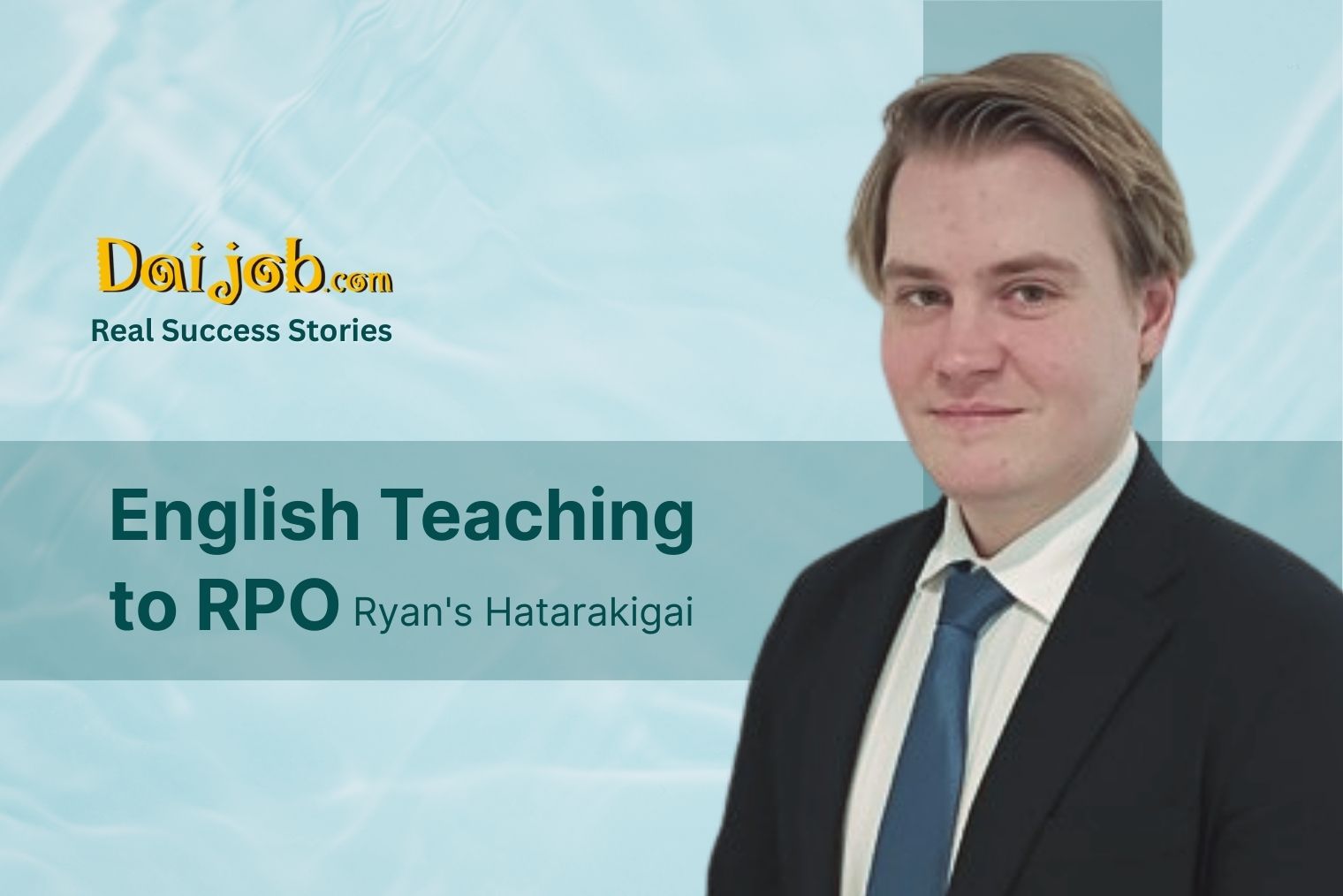
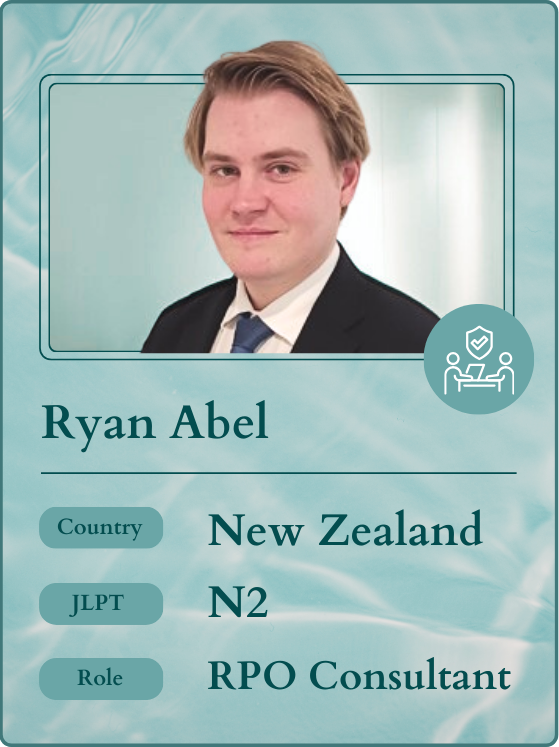
In this exclusive interview, we speak with Ryan Abel, an RPO consultant, about his career journey from teaching English via the JET Program to finding fulfillment in consulting. He shares insights on adapting to the Japanese business culture, the challenges of keigo, and advice for other foreigners looking to make a career change in Japan.
The Unexpected Path to Consulting
Q: Can you tell us more about your background and what brought you to consulting in Japan?
Ryan: My journey to Japan began after high school in New Zealand. I was unsure about my career but became inspired by traveling to Japan, which led me to study Japanese language and culture at university. This included a student exchange to Hokkaido. After graduating, I moved to Japan through the JET Program and taught English for four years, later continuing to teach for a bit longer in Kanagawa. Eventually, I realized that I could not teach English permanently and I wanted to use more of my Japanese language skills. I began looking seriously for a new role at the start of last year.
Q: How did you transition from teaching and translation into an RPO consulting role?

Ryan: The recruiter from my current job reached out to me “out of the blue.” I knew very little about RPO (Recruitment Process Outsourcing) or consulting. My wife works in recruitment for overseas clients, and she provided some background on the recruitment industry in Japan, which I knew was significant. I briefly considered translation because of my Japanese and English skills, but I found freelancing in that field to be “lonely and a bit boring.” The RPO team at my office was appealing because it offered the opportunity to interact with many people from different countries, which I enjoy. The interview process was quick and involved talking to multiple team members, which was a positive experience. I had no previous experience in this industry, making it a completely new and exciting challenge.
💡 Quick Tip for Career Change in Japan: Look Beyond the Obvious: Do not limit your job search to industries you already know (like English teaching or translation). Ryan was scouted for RPO, a role he didn’t know about. Sign up for job portals and keep an open mind to unexpected opportunities; they can lead to your next great career.
Navigating Japanese Business Culture
Q: You have lived in Japan for seven years. What has been your overall experience of living and working here, especially as a foreigner?
Ryan: I have lived in Japan for seven years now. Early on, the JET Programm helped a lot with initial setup like bank accounts and apartments, so I avoided many of the typical struggles foreigners face when they first arrive. In the workplace, I adapt well by observing and copying what my coworkers do to fit into the office flow.
Q: You mentioned adapting to the office flow. How does the decision-making process in Japanese companies differ from what you were used to?
Ryan: The decision-making process is different in Japanese companies. Outside of Japan, meetings often involve people debating and giving opinions to make a point. In Japan, meetings are typically for confirming what everyone is already doing. This is thanks to nemawashi, or pre-meeting communication, which happens beforehand. Working at my current job involves a lot of this pre-meeting communication with both the team and clients, which helps to ensure smooth proceedings and avoid problems.
📝 Japanese Business Term: Nemawashi (根回し): Root-binding; informal process of laying the groundwork for a proposal before the formal meeting.
💡 Quick Tip : In a Japanese company, make sure you talk to key stakeholders before a major meeting. The actual meeting should be a formality to confirm decisions already made, not the place to introduce a new idea. This process helps ensure smooth operations and avoids conflicts.

Q: What has been the biggest cultural or linguistic challenge you have faced?
Ryan: My struggles have been minimal, mostly related to my Japanese language skills. The most challenging aspect is mastering business Japanese, or keigo. I consume a lot of Japanese media and know casual Japanese, but I lack practice in business Japanese and sometimes need coworkers to correct me.
📝 Japanese Business Term: Keigo (敬語): Honorific language; a complex system of polite speech in Japanese. It is used to show respect to superiors, clients, or people of a higher status.
💡 Quick Tip: Do not worry about mastering keigo right away. Even younger Japanese people find it difficult. Focus on being polite, observing your coworkers, and gradually improving. You can still be effective in your role while learning.
📰 Lean more about Business Japanese from here
The Role of Daijob Platform in Job Search
Q: What positive aspects did you find about the Dai Job portal and platform when you were job hunting?
Ryan: When I was job hunting, I used over 10 agencies. Compared to other Japanese-focused agencies, I found the Dai Job platform’s UI (user interface) easier to navigate, with a nicer layout and effective use of colors. I personally prefer the simple design, as a flashy website can be confusing. The platform is also designed for bilingual candidates, offering good options for both English and Japanese. This is very useful for candidates from places like Southeast Asia who often have strong skills in both languages.
Q: What gives you a sense of fulfillment in your RPO role?
Ryan: I have been working in RPO for over a year, and the most enjoyable part is helping candidates secure a job that they will genuinely enjoy. It is rewarding when candidates reach out a month later to say they are doing well. The role allows me to connect with and reassure other foreigners in Japan, for example, by explaining confusing things like visa support. I have found my ikigai and hatarakigai, which is a great way to put it.
Q: What are your career goals, particularly considering the current economic conditions in Japan, such as the weak yen and inflation?
Ryan: I plan to “keep my head down” and remain in Japan for the foreseeable future, as my home country of New Zealand is also dealing with high inflation. Despite the weak yen and stagnant salaries, the cost of living here, especially rent, is still relatively good and much cheaper than in New Zealand. My goal is to continue working at my current job for at least a couple more years to keep learning in my role. I enjoy my current position, and I am gaining valuable knowledge by taking on new clients and learning about new industries outside of English education. I plan to stay in my current position for a while and hope to receive more money.
Q: What advice do you have for people currently seeking new employment or hesitant to make a career move in Japan?

Ryan: My main advice is to be more open to opportunities. There are many jobs that people may not know about, and timing is everything. For example, I did not know about the RPO industry before I received a scout on Daijob. Even if you do not feel like you are a “100% best match” for a role, you should still reach out to the recruiter. Job descriptions do not always clearly state whether a skill is “100% necessary” or a “nice to have,” and sometimes other experiences can compensate for a lack of a specific required skill, which can still lead to a job offer.
Take Away
Ryan Abel’s story shows that a successful career change in Japan is possible, even if the path is unexpected. His transition from English teaching to RPO consulting highlights the importance of adaptability, a willingness to learn, and an open mind.
Ryan continues to build a meaningful career, driven by his passion for helping candidates secure a job they love, proving that a fulfilling professional life in Japan is well within reach for foreigners willing to take the leap. Do not wait until you are a “100% best match” for a job description. Recruiters often look for potential, adaptability, and compensating skills. Reach out to the recruiter and let them assess your fit—you might be surprised by the outcome!-
Discover Your Next Role in Japan. Access more than 10,000 jobs for free!
- Jobs in Japan @ Daijob.com
- Expat Career Guide
- Real Success Stories
- English Teaching to RPO: Ryan’s Hatarakigai