
- Jobs in Japan @ Daijob.com
- Expat Career Guide
- Skill Up
- Making a call in Japan (business Japanese version)
Expat Career Guide
Making a call in Japan (business Japanese version)
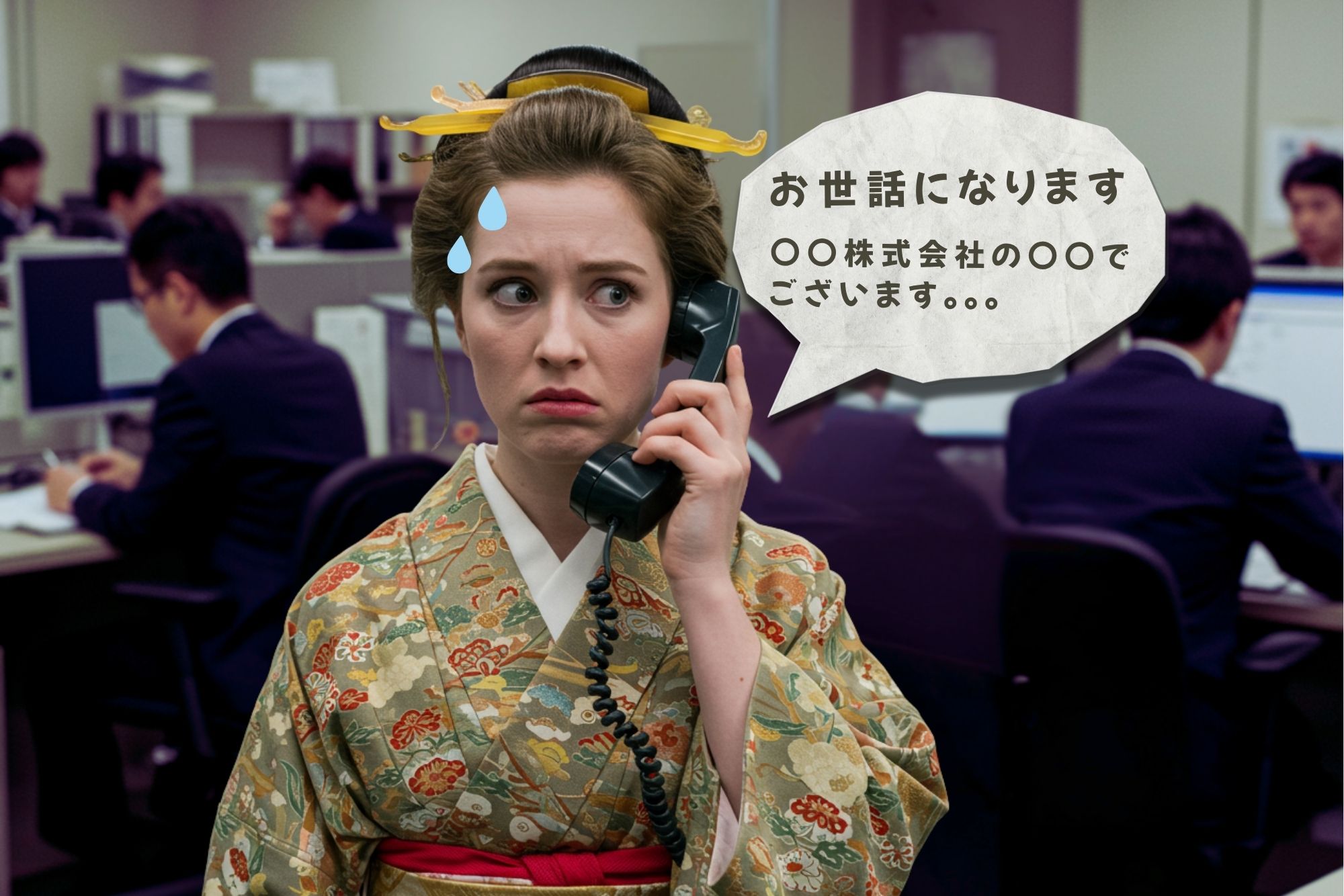
Making a call in Japan for business purposes demands more than just speaking Japanese; it requires mastering Business Japanese and understanding deeply ingrained cultural protocols. A well-executed business call can open doors, build trust, and showcase your professionalism. Conversely, missteps can hinder communication and impact relationships.
This comprehensive guide will equip foreign professionals with the knowledge and phrases necessary for confidently making a call in Japan within a business context. We’ll delve into the specific etiquette, essential Business Japanese phrases, and strategies for successful phone communication that aligns with Japanese professional norms.
Understanding Business Phone Etiquette in Japan
Business phone calls in Japan are highly formalized. They serve not just to convey information but also to reinforce hierarchy, build rapport, and demonstrate respect. When making a call in Japan professionally, consider these foundational elements:
The “Uchi-Soto” (内-外) Concept
This core Japanese concept distinguishes between “inside” (uchi – your company, close colleagues) and “outside” (soto – clients, partners, other companies). Your language and politeness level shift significantly depending on whether you are talking to someone from your “uchi” or “soto” group. Always err on the side of formality when making a call in Japan to an “outside” person.
Emphasis on Hierarchy and Respect (Keigo)
Keigo (敬語), or honorific language, is paramount in Business Japanese. It reflects respect for the listener’s status. Misusing keigo can convey disrespect or even appear rude. You will use different forms of verbs and nouns when speaking to a superior, a client, or someone of higher status. Mastering keigo for phone calls shows serious commitment to professional communication in Japan.
Precision and Clarity
While Japanese communication often appears indirect, business calls demand clarity and accuracy. Confirming details, repeating information, and summarizing points are crucial steps to avoid misunderstandings, especially when discussing important figures, dates, or technical specifications.
The “Hōrensō” (報連相) Principle
This business principle stands for Hōkoku (報告 – Report), Renraku (連絡 – Communicate), and Sōdan (相談 – Consult). It emphasizes proactive, frequent, and transparent communication. When making a call in Japan, consider if your call aligns with this principle – are you reporting status, communicating information, or consulting on a problem?
Initiating a Business Call: Your First Impression
The start of a business call sets the tone for the entire conversation. Making a call in Japan requires a polite and structured opening.
Proper Timing
Avoid calling outside standard business hours (typically 9:00 AM – 6:00 PM), unless it’s a pre-arranged or urgent matter. Avoid calling during lunch breaks (usually 12:00 PM – 1:00 PM) if possible.
The Opening Greeting
- ・When you call: Start with “お世話になっております。” (Thank you for your continued support/kindness.). This is a standard, versatile business greeting.
- ・Identify Yourself and Your Company: Immediately state your company name and your full name. For example: “〇〇株式会社の[あなたの名前]でございます。” (This is [Your Name] from [Your Company Name] Co., Ltd.)
※”De gozaimasu” is a highly formal way of saying “desu.”
Stating Your Purpose Clearly and Concisely
After identification, briefly state the reason for your call.
- ・Example: “Aプロジェクトの件でお電話いたしました。” (I am calling regarding Project A.)
- ・Example: “先日のお打ち合わせの件で、確認したいことがございまして。” (I wish to confirm something regarding our recent meeting.)
Essential Business Japanese Phrases for Phone Calls
Mastering these phrases significantly boosts your confidence when making a call in Japan for business.
Answering a Business Call (If you receive one)
・”〇〇株式会社でございます。” (This is [Your Company Name] Co., Ltd.)
・”お電話ありがとうございます。” (Thank you for calling.)
・”恐れ入りますが、お名前をお伺いしてもよろしいでしょうか。” (May I ask who is calling?)
Asking to Speak to Someone
・”[相手の名前]様はいらっしゃいますか?” (Is [Recipient’s Name] there?)
・”申し訳ございませんが、[相手の名前]はただ今席を外しております。” (I apologize, but [Recipient’s Name] is currently away from their desk.)
・”伝言を伺いましょうか?” (Shall I take a message?)
・”後ほど、こちらからお電話させましょうか?” (Shall we have them call you back later?)
Explaining Your Purpose (More Detail)
・”〇〇の件でご相談させて頂きたく、お電話いたしました。” (I called because I would like to consult with you about [topic].)
・”〇〇の件で、ご確認をお願いできれば幸いです。” (I would be delighted if I could request you for confirmation regarding, [topic]”)
During the Conversation
・Confirming Understanding: “かしこまりました。” or “承知いたしました。 (Understood)
・Asking for Repetition/Clarification: “恐れ入りますが、もう一度お伺いしてもよろしいでしょうか?” (Excuse me, may I ask you again?) or “恐縮ですが、もう少し詳しく教えていただけますか?” (I’m sorry to trouble you, but could you tell me a little more in detail?)
・Asking for a Moment: “少々お待ちいただけますでしょうか?” (Could you please wait a moment?)

Ending the Call Politely
“本日はお忙しいところ、ありがとうございました。” (Thank you for your time today despite your busy schedule.)
“それでは、失礼いたします。” (Well then, please excuse me).
“今後ともどうぞよろしくお願いいたします。” (I look forward to our continued good relations.)
※Tip: Wait for the other party to hang up first, especially with superiors or clients.
Common Business Scenarios and Dialogue Flow
Practicing common scenarios helps you when making a call in Japan.
Scenario 1: Calling a client to follow up on a proposal
You: “お世話になっております。〇〇株式会社の[あなたの名前]でございます。△△部の鈴木様はいらっしゃいますでしょうか?” (Thank you for your continued support. This is [Your Name] from [Your Company Name] Co., Ltd. Is Mr./Ms. Suzuki from Department Triangle there?”
Client’s Receptionist/Colleague: “はい、少々お待ちください。” (Yes, please wait a moment.)
(Connects call)
Client: “お電話代わりました。鈴木です。” (I’ve taken the call. This is Suzuki)
You: “鈴木様、いつもお世話になっております。〇〇株式会社の[あなたの名前]です。先日お送りいたしました企画書について、少しご意見を伺いたく、お電話いたしました。” (Mr./Ms. Suzuki, thank you for your continued support. This is [Your Name] from [Your Company Name] Co., Ltd. I called because I wanted to ask for your opinion on the proposal we sent the other day.”
Scenario 2: Receiving a call from a client
You: “〇〇株式会社でございます。お電話ありがとうございます。” (This is [Your Company Name] Co., Ltd. Thank you for calling.”
Client: “△△株式会社の[相手の名前]と申します。先日ご担当いただいた[あなたの名前]様はいらっしゃいますでしょうか?” (My name is [Client’s Name] from [Client’s Company Name] Co., Ltd. Is [Your Name], who handled me the other day, there?)
You: “はい、私でございます。〇〇様、いつもお世話になっております。” (Yes, that’s me. Mr./Ms. [Client’s Name], thank you for your continued support.)
Overcoming Language Barriers while making calls
Even with advanced Business Japanese, language barriers can arise. Making a call in Japan requires strategies to manage these moments.
・Politely Asking for Clarification: Don’t hesitate to ask for repetition or slower speech.
“恐れ入りますが、もう一度ゆっくりお話しいただけますでしょうか?” (I’m very sorry, but could you please speak slowly one more time?”
・Using Simpler Terms: If you are the one speaking, try to use simpler vocabulary and sentence structures, even within keigo.
・Confirmation Summaries: Periodically summarize what you understand to ensure accuracy. “つまり、〜ということですね?” (In other words, it’s about ~, correct?)
・Email Confirmation: For critical details, suggest confirming via email after the call: “念のため、後ほどメールでも確認させて頂いてもよろしいでしょうか?” (Just to be sure, would it be alright if I confirm by email later?)
・Having a Japanese Colleague Nearby: If possible, for very important calls, have a Japanese colleague available to assist if communication becomes difficult.
Cultural Nuances Beyond Just Words
Making a call in Japan successfully also involves understanding the underlying cultural context.
・Omotenashi (おもてなし): This concept of selfless hospitality often extends to phone interactions. Be prepared for a high level of politeness and attentiveness from the person you are calling.
・Indirectness in Problem Solving: While direct for stating purpose, discussing problems can be indirect. People might hint at issues rather than state them outright. Pay attention to subtle cues.
・Apologies (Sumimasen): “Sumimasen” (すみません) is a highly versatile word. It can mean “excuse me,” “I’m sorry,” or “thank you.” You might hear it used frequently even for minor inconveniences.
・Silence: Silence during a conversation is not necessarily awkward. It can indicate thoughtfulness or processing information. Avoid rushing to fill the silence.
Utilizing Technology for communication
Modern tools can aid in making a call in Japan for business.
・VoIP and Video Conferencing: For internal team calls or pre-arranged external meetings, platforms like Zoom, Google Meet, or Microsoft Teams are widely used. These offer screen sharing and visual cues that can help overcome language barriers.
・Translation Apps (for preparation): While live translation on a call is challenging, use apps like Google Translate or DeepL to prepare your script or understand complex emails.
・Online Japanese Dictionaries: Have a reliable online dictionary handy for quick look-ups of unfamiliar business terms.
Take Away
Making a call in Japan for business goes far beyond simply dialing a number. It’s an opportunity to demonstrate your respect, professionalism, and commitment to effective communication within Japanese corporate culture. By embracing the nuances of Business Japanese, mastering polite phrases, and understanding the unspoken rules of etiquette, you can build stronger relationships and achieve greater success in your professional life in Japan.
Remember, practice makes perfect. Don’t be afraid to make mistakes; each call is a learning opportunity. With persistence and a willingness to adapt, you will confidently navigate making a call in Japan and forge lasting professional connections. Your efforts to communicate effectively will be highly appreciated and will undoubtedly pave the way for a fulfilling career in Japan.

For more in-depth information on Japanese business etiquette and communication, read this articles:
📰 Saying No in Japan: how to decline something respectfully
📰 Slangs Used by Young People in the Workplace
📰 Onomatopoeia in Japanese – Business Japanese with Human Academy
Discover Your Next Role in Japan. Access more than 10,000 jobs for free!
- Jobs in Japan @ Daijob.com
- Expat Career Guide
- Skill Up
- Making a call in Japan (business Japanese version)