
- Jobs in Japan @ Daijob.com
- Expat Career Guide
- Expat Essentials
- 2026 Salary Benchmarks in Japan: Are You Earning a Premium?
Expat Career Guide
2026 Salary Benchmarks in Japan: Are You Earning a Premium?

As Japan moves into 2026, the demand for bilingual professionals is reaching historic levels. The country currently faces a massive shortage of over 220,000 IT workers. This gap has created a competitive landscape where skills and language proficiency dictate high pay. For professionals with JLPT N1 or N2 certifications, the financial landscape has shifted significantly. Let’s dive deeper into 2026 Salary Benchmarks in Japan
The Value of the Bilingual Salary Premium in 2026
Bilingual proficiency remains one of the most valuable assets in the Japanese job market. Global companies are willing to pay a high price for talent that bridges cultural gaps.
Why the Premium Exists
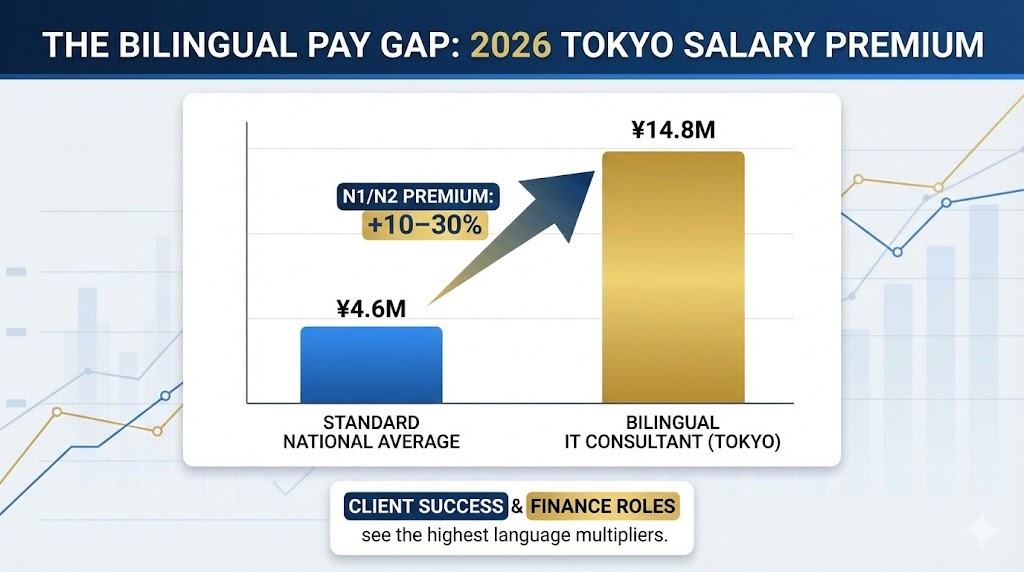
Companies in Japan are expanding their global reach. Consequently, they need staff who can navigate both English and Japanese business environments. This necessity drives a bilingual salary premium that typically ranges between 10% and 30%.
Language Premium (2026 median ranges):
- ・Client Success / Account Management: earns a +20–30% estimated premium.
- ・Finance & Accounting: attracts a +15–25% premium for Japan portfolios.
- ・Engineering & Manufacturing: sees a +10–20% premium for N1/N2 holders.
Fluency is no longer just a bonus. Instead, it has become a baseline for high-level leadership roles.
2026 Salary Benchmarks Japan: A Sector Breakdown
Salary growth in Japan is currently robust. In fact, 55% of companies plan to increase pay this year. Understanding the 2026 salary benchmarks in Japan is crucial for knowing your worth.
1. Tokyo IT Jobs 2026
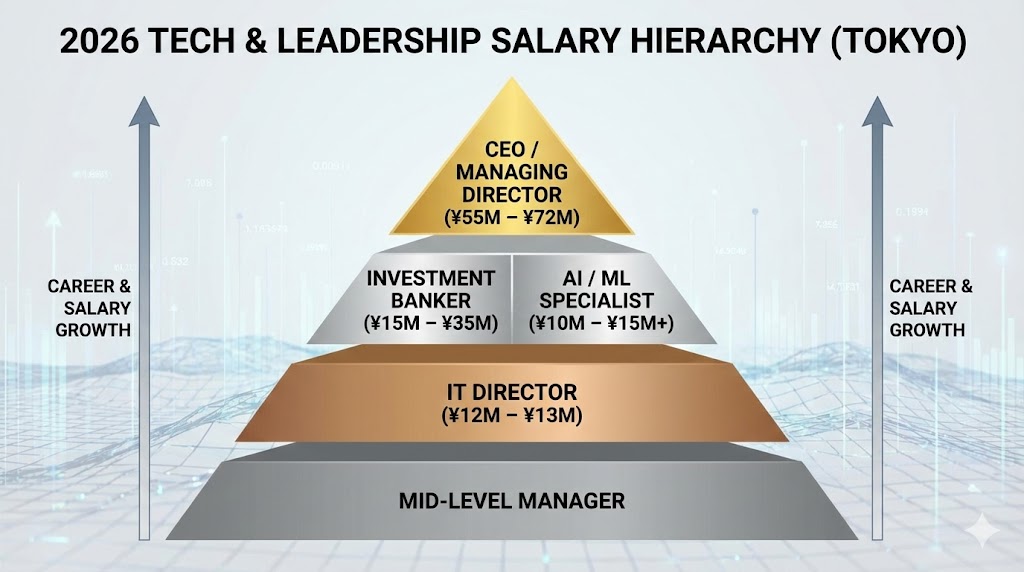
The technology sector offers some of the highest earning potential. International software engineers in Tokyo now earn a median of ¥8M to ¥12M.
| IT Role (2026 Benchmark) | Typical Salary Range (¥ Million) | Key Driver |
| IT Director | ¥12M – ¥25M | High leadership demand |
| AI / ML Specialist | ¥10M – ¥15M | Rapid AI adoption |
| Cybersecurity Director | ¥9M – ¥14M | Massive talent deficit |
| Cloud Architect | ¥8M – ¥13M | Shift to remote infra |
2. Finance and Executive Leadership
Finance professionals are seeing strong growth due to digitalization and fintech. High-level bilingual managers are particularly sought after for their governance skills.
- ・CEO / Managing Director: ¥55M – ¥72M.
- ・Investment Banker: ¥15M – ¥35M.
- ・CFO: ¥20M – ¥30M.
- ・Finance Professional (Tokyo): ¥6M – ¥12M.
Latest Data Source: 9cv9 Japan Salary Outlook 2026

The Impact of JLPT N1/N2 on Your Income
Your JLPT N1 salary potential depends heavily on your industry and specific role. While N2 is often sufficient for office jobs, N1 unlocks executive-level tiers.
Benchmarks by Proficiency Level
- ・JLPT N1: Required for leadership, executive positions, and specialized research.
- ・JLPT N2: The standard for finance, management, and professional consulting roles.
- ・JLPT N3: Sufficient for entry-level tech and engineering positions at global firms.
Furthermore, professionals holding N1 or N2 can expect faster career progression. They also gain more exposure to cross-border operations.
Regional Variations: The Tokyo Premium
Location remains a decisive factor in your paycheck. Tokyo IT jobs 2026 pay significantly more than roles in other regions.
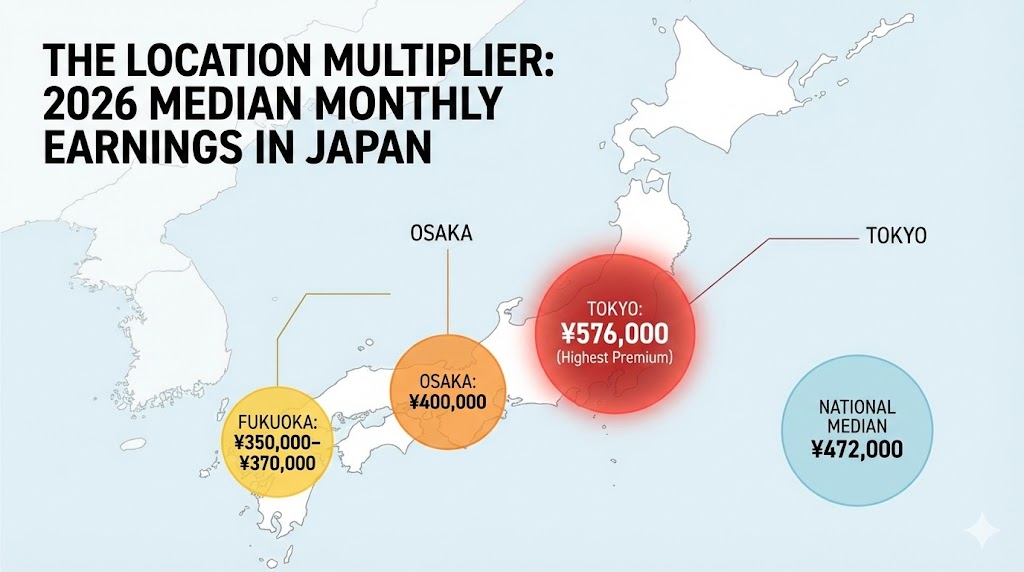
- ・Tokyo: Salaries are 20–40% above the national average.
- ・Osaka and Nagoya: Offer moderate costs with competitive job markets.
- ・Rural Areas: Pay is 30–40% lower, but housing costs are significantly reduced.
While Tokyo offers high pay, it also has the highest living expenses. Therefore, many workers now prioritize flexible or hybrid arrangements to balance income and costs.
Important Note for Residents
As your income grows, administrative tasks also change. For example, the new ID systems starting this year will affect how you prove residency. You should read our previous guide on the 2026 ID Card Merger to stay compliant.
Salary Negotiation Japan: Strategies for 2026
Effective salary negotiation in Japan requires clear evidence of your market value. You must demonstrate how your skills solve specific company problems.
Key Steps for Negotiation
- Research Market Rates: Use salary comparison tools before entering a meeting.
- Quantify Achievements: Use metrics like sales growth or cost savings to prove worth.
- Understand the Full Package: Negotiate for bonuses, allowances, or flexible working if the base is fixed.
- Timing Matters: The best time to negotiate is when an employer makes their first offer.
Avoid making negotiations personal or using vague demands. Instead, maintain a collaborative tone during the discussion.
Take Away
The year 2026 is a golden era for skilled bilingual professionals in Japan. With wage reform momentum continuing, companies are ready to invest in top talent. Whether you are in IT, finance, or management, your JLPT N1 or N2 certification remains a powerful bargaining chip. However, staying informed about the latest benchmarks is the only way to ensure you are not underpaid.
Is your salary keeping up with 2026 benchmarks? Register your CV on Daijob today to see your current market value.
Discover Your Next Role in Japan. Access more than 10,000 jobs for free!
- Jobs in Japan @ Daijob.com
- Expat Career Guide
- Expat Essentials
- 2026 Salary Benchmarks in Japan: Are You Earning a Premium?