
- Jobs in Japan @ Daijob.com
- Expat Career Guide
- Skill Up
- Beyond the Textbook: Insider Business Japanese Phrases
Expat Career Guide
Beyond the Textbook: Insider Business Japanese Phrases
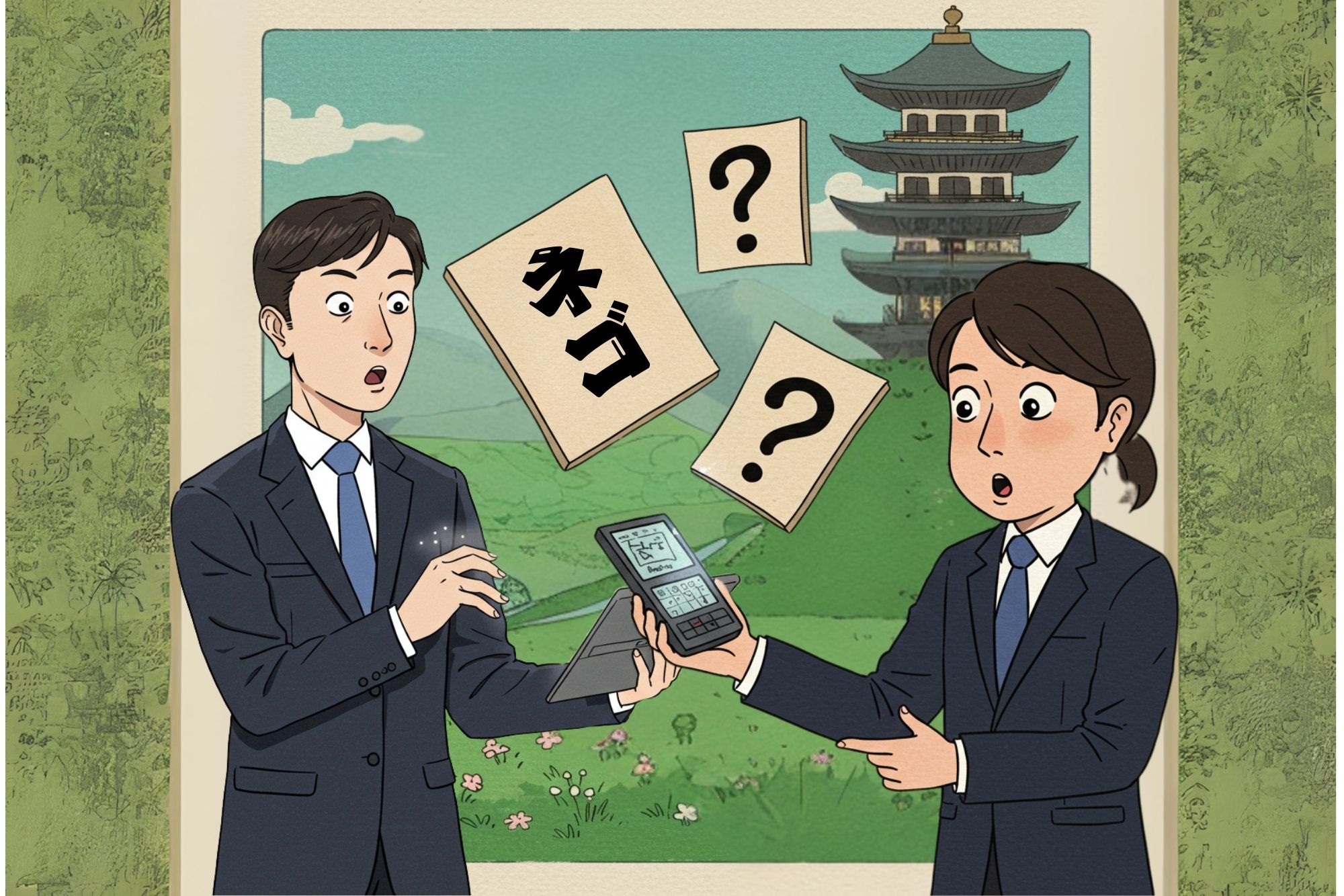

Navigating the Japanese workplace requires more than textbook language. While you may have mastered polite greetings and fundamental grammar, you will quickly discover that real-world office communication uses its own unique vocabulary. Many of these business Japanese phrases are not taught in language schools. This guide is your key to understanding the inside language of the Japanese office, from the confusing world of Wasei-Eigo to the subtle slang that defines daily interactions. By mastering these business Japanese phrases and terms, you will not only sound more professional but also build stronger relationships and truly integrate into the corporate culture.
English Words with a Japanese Twist
One of the biggest challenges for foreigners in a Japanese office is the pervasive use of Wasei-Eigo (和製英語). These are words created in Japan by combining or shortening English words, or by giving existing words completely new meanings. Understanding these business Japanese phrases is crucial to avoid major misunderstandings.
バッティング (Battingu)
In English, this refers to hitting a ball with a bat. In business Japanese phrases, it means a scheduling conflict or a clash. If your manager says, “その会議はAさんとバッティングしている” (Sono kaigi wa A-san to battingu shiteiru), they mean “That meeting clashes with Mr./Ms. A’s schedule.” You would never use “batting” to refer to a sports activity in this context.
Origin: The term comes from the English word “batting,” as in baseball. The concept of two bats clashing or hitting at the same time became a metaphor for two schedules, events, or people clashing.
Nuance: It is almost exclusively used in professional settings to refer to scheduling conflicts. For example, a meeting, a phone call, or a project deadline can be “batting” with something else. It is a very common term for describing a logistical problem.
ブレスト (Buresuto)
This is a shortening of “brainstorming,” and it is used to refer to a brainstorming session. For example, “新しい企画のためにブレストしましょう” (Atarashii kikaku no tame ni buresuto shimashou) means “Let’s have a brainstorming session for the new project.” The word “brainstorming” is too long for daily use, so the short version is common in this context.
Origin: This is a clipped, or shortened, form of “brainstorming” and has been in use in Japan since the 1960s. The full word is too long and complex for quick, daily conversation, so the shortened form became the standard.
Nuance: While it means “brainstorming session,” it often implies a less formal, free-flowing discussion. It’s used when a group needs to generate many ideas quickly without judgment. It is a more casual term than “discussion” or “meeting.”
コンセンサス (Konsensasu)
While this word comes from “consensus,” in Japanese business phrases, it is often used as a verb meaning “to get a consensus” or “to build agreement.” For example, “チーム内でコンセンサスを取る必要がある” (Chīmu-nai de konsensasu o toru hitsuyou ga aru) means “We need to get a consensus within the team.”
Origin: The term is a direct loanword from “consensus.” However, in English, “consensus” is a noun. In Japanese, it is frequently used with the verb “取る” (toru, to take) to mean “to reach a consensus” or “to get an agreement.” This verb pairing gives the term an active, process-oriented meaning that is slightly different from its English counterpart.
Nuance: The phrase “コンセンサスを取る” (konsensasu o toru) implies a proactive effort to align people’s opinions, often through informal conversations or internal meetings. It is a crucial part of the nemawashi process, as a consensus is typically “taken” before any formal vote or final decision is made.
ネゴ (Nego):
This is a popular shortening of “negotiation.” If a colleague says, “クライアントとネゴする” (Kuraianto to nego suru), they mean “to negotiate with the client.” It is a quick and efficient way to refer to the process.
Origin: This term is a shortening of “negotiation.” Like ブレスト, the full word is too long for the fast-paced office environment.
Nuance: ネゴ is used almost exclusively in the business world to refer to professional negotiations, particularly related to contracts, prices, or business deals. It is a more technical term than a general argument or discussion. The verb form is often ネゴる (negoru), which is a casual verb form of the noun.
キャッチアップ (Kyacchuappu)
In English, “catch up” has many meanings. In Japanese business phrases, it almost always means “to get up to speed” on a project or situation. “昨日の会議の内容をキャッチアップしてください” (Kinou no kaigi no naiyou o kyacchuappu shite kudasai) means “Please catch up on the details of yesterday’s meeting.”
Origin: From the English phrasal verb “to catch up.”
Nuance: While “catch up” in English can mean to see a friend you haven’t seen in a while, in business Japanese phrases, it almost always refers to getting updated on a professional project, situation, or a meeting you missed. It implies bringing one’s knowledge to the same level as others. For example, a senior colleague might ask, “プロジェクトの状況、キャッチアップしましたか?” (Purojekuto no jōkyō, kyacchuappu shimashita ka?) which means “Have you caught up on the project’s status?”

Japan-Only Terms & Concepts
Beyond the world of Wasei-Eigo, some business Japanese phrases refer to concepts or practices unique to the Japanese workplace. Knowing these is a sign of true integration.
報・連・相 (Hō-Ren-Sō)
This is perhaps the most important concept in Japanese business phrases. It is an acronym for a fundamental principle of workplace communication.
- ・報告 (Hōkoku): Report. You must report progress or results to your superiors.
- ・連絡 (Renraku): Inform. You must inform relevant people of any important information.
- ・相談 (Sōdan): Consult. You must consult with your superiors or colleagues if you have a problem or are unsure. This three-part concept is a cornerstone of Japanese corporate culture. Employees who fail to practice Hōrensō are often seen as uncooperative or unreliable.
プラスアルファ (Purasu Arufa)
This is a term that means “a little something extra” or “value-added.” If your boss asks you for a report with purasu arufa, they mean they want you to go beyond the basic requirements and add extra value or insight. It is a common way to express a desire for high-quality, proactive work.
たたき台 (Tatakidai)
This phrase translates literally to “beating block,” but its meaning in Japanese business phrases is completely different. It means a draft or a provisional plan that is meant to be discussed and revised. It is a way to present an idea without it being final, inviting feedback and collaboration. “この企画書はたたき台です” (Kono kikakusho wa tatakidai desu) means “This proposal is a draft for discussion.”
根回し (Nemawashi)
This term is unique to Japanese corporate culture. It literally means “root-binding,” but in business, it refers to the process of informally building a consensus or gaining support for a decision before a formal meeting. It is a way to ensure a meeting goes smoothly and everyone is on the same page. A skilled business person practices Nemawashi to avoid public conflict or disagreement.
調整 (Chōsei)
This word means “adjustment” or “coordination,” and it is a crucial business Japanese phrase. It is used to refer to the process of coordinating schedules, ideas, or plans among many people. “スケジュールの調整をお願いします” (Sukejūru no chōsei o onegai shimasu) means “Please coordinate the schedule.”
Shortened Terms: The Language of Efficiency
Japanese office workers frequently shorten business Japanese phrases to save time. These shortened terms are a kind of professional slang.
リスケ (Risuke)
This is a very common shortening of “reschedule.” For example, “会議をリスケする” (Kaigi o risuke suru) means “to reschedule the meeting.” It is used widely across all industries.
アポ (Apo)
This term is a shortening of “appointment.” “クライアントにアポを取る” (Kuraianto ni apo o toru) means “to make an appointment with the client.” It is a quick and effective way to refer to setting up a meeting.
メルアド (Meruado)
This term is a shortening of “mail address.” While the full term is also used, this shorter version is common in casual and even semi-formal emails.
リモート (Rimōto)
Short for “remote,” this term is widely used to refer to remote work. “今日はリモートで働きます” (Kyou wa rimōto de hatarakimasu) means “I will work remotely today.” This term has become especially popular in recent years.
ギョーカイ (Gyōkai)
A shortening of “業界” (gyōkai), meaning “industry.” This term is used in a more casual, insider way to refer to one’s own industry. For example, “うちの業界では…” (Uchi no gyōkai de wa…) means “In our industry…”
Our Recommendation
“The Japanese business world is a fascinating blend of tradition and modernity. While Japanese is the primary language, you’ll encounter a surprising number of English words. These words, however, often take on new meanings and nuances in the Japanese context. This can lead to confusion…..”
Want to read more? Check
📰 Business Japanese, but English words?
Take Away

Textbook Japanese provides a foundation, but mastering business Japanese phrases and insider terms is what truly opens the door to effective communication and professional growth in Japan. Understanding Wasei-Eigo prevents awkward misunderstandings, recognizing unique concepts like Nemawashi allows you to navigate the subtle social dynamics, and using common shortforms helps you sound like a true insider. By going beyond the basics and making an effort to learn this practical language, you demonstrate your commitment and respect for Japanese corporate culture. This effort will not only improve your daily work but will also strengthen your professional relationships and accelerate your career in Japan.
External Links:
- Nippon.com – Japanese Business Terminology – Explains common Japanese business concepts like Nemawashi and Ringi.
- Coursera – Mastering Business in Japan – Offers courses on the Japanese business environment, which can include some of these terms.
Discover Your Next Role in Japan. Access more than 10,000 jobs for free!
- Jobs in Japan @ Daijob.com
- Expat Career Guide
- Skill Up
- Beyond the Textbook: Insider Business Japanese Phrases